
The Mammals
The summer of 2026 was termed a firewave by experts due to the ‘perfect ingredients’ for a wildfire disaster – 30-degree temperatures, 30mph winds and 30% humidity. Whilst wildfires in the UK are often not seen as ‘wild’ because their cause is due to human action (disposable BBQs, discarded cigarettes etc), there is a formal definition that means that any uncontrolled vegetation fire that involves the fire service is termed a wildfire.
The national alert highlighted the threat that wildfires can pose to the environment, the economy, communities, air quality, public health and ultimately risk to life. Quite clearly there needs to be an ignition source as the national alert sought to address but too much emphasis is placed on this. The real problems occur when there is vegetation available for the fire to spread (termed the fuel load), with the amount and structure determinants of the severity of the fire – and therefore its impacts.
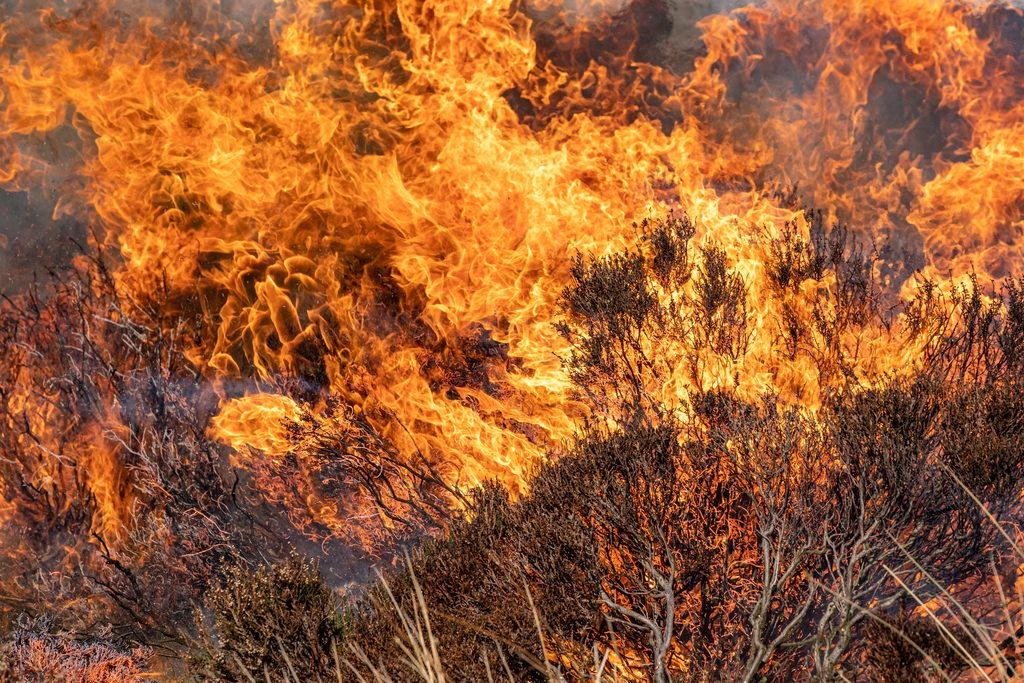
When next out walking look around at the structure of the vegetation and consider the rule of thumb used to judge the likely severity of a wildfire: a wildfire flame with no wind is approximately twice the height of the vegetation, with wind and aspect increasing this a further 2-3x. So, if walking through waist high bracken, or knee high grass or heather, this means that the flame length in the recent winds experienced will be head height – as a minimum. Given that a flame length less than the height of the average male is beyond the direct control of the Fire & Rescue Services, it is clear how a wildfire gets out of control so quickly.
The trend towards the reduced management of our moorlands in pursuit of climate resilience and nature recovery is ironically leading to the unintended consequence of wildfire risk increasing. The damage done by a wildfire undoes all the potential benefits of peatland restoration and more, as the severity of the wildfire alters the peat surface so that it repels water and destroys the seed bank on which habitat recovery would rely. A severe peatland wildfire will burn down into the peat releasing thousands of tonnes of stored carbon. It has been estimated that more than 25,000 t of carbon were lost during the Fylingdales/Langdale wildfire last year with damage extending down into the peat to depths of up to 20cms. If you take the rule of thumb that peat accumulates in the UK at 1mm p.a. if conditions are perfect, then it will take at least 200 years to replace that which has been lost.
Given we can’t change the climate, we need to get real about managing the fuel load and employ all the tools in the toolbox – grazing, rewetting, cutting and prescribed ‘cool’ burning – as each site will be different.
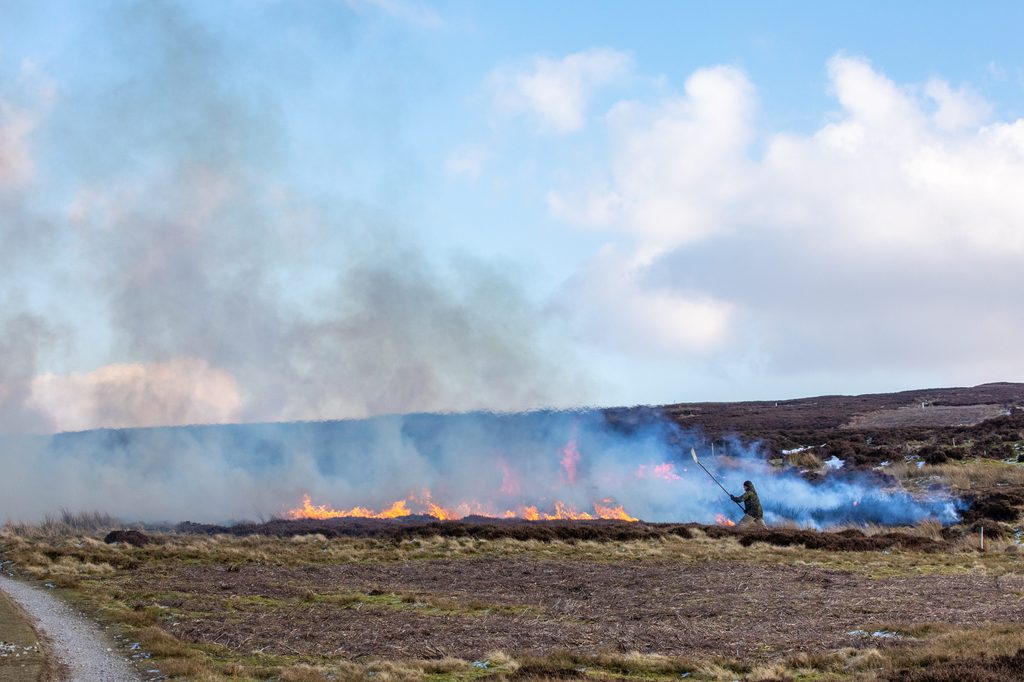
Prescribed burning (using fire to deliver a desired outcome) is employed by the fire service to create fuel breaks and fire control lines during a fire. UK firefighters have been trained by moorland gamekeepers, given their knowledge of fire behaviour, for this purpose. But its use during the autumn and winter (the heather burning season) on grouse moors is increasingly restricted by regulations, particularly on deep peat. This is the ideal time to manage heather in this way as the underlying soil (often peat) is wet and the heather is yet to green up so is relatively dry. The resulting mosaic of habitat structure and type not only supports key bird species such as the red grouse and curlew but also it removes the potential fuel for a more dangerous and severe summer wildfire and lets light reach the underlying moss supporting peatland restoration. The lack of acknowledgement that emissions from a ‘cool’ prescribed burn are a fraction of those from a severe wildfire is worrying.
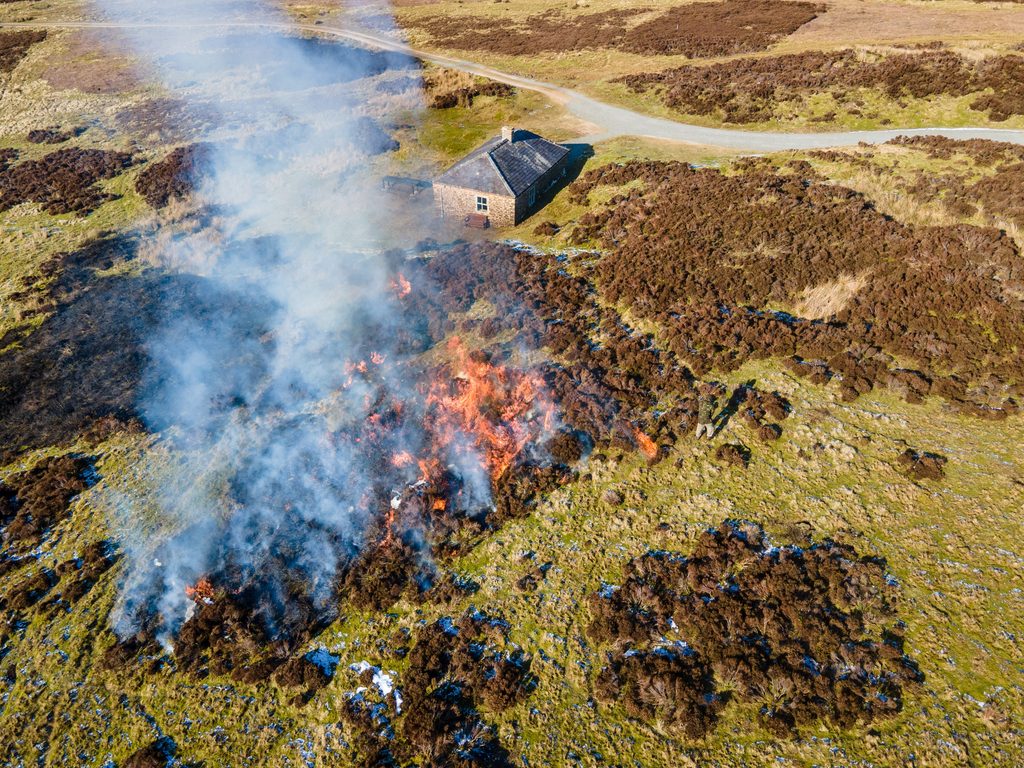
Whilst uncontrolled wildfires are an acknowledged threat to many government goals (net zero, clean air and water and nature recovery), ideological debate on the pros and cons of grouse shooting and its associated management is resulting in prescribed fire being seen as the enemy, not a friend.
Fire is a natural ecological process that has been adopted and adapted by man over centuries to achieve desired outcomes such as the cultural traditions of slash and burn in the Amazon or the Aborigines in the bush of Australia or indeed upland management in the UK for livestock grazing and grouse shooting. As a result, many of our moorland species are fire-adapted – the smoke or heat enhances their re-growth or growth from seed – meaning that the removal of ‘cool’ prescribed fire from the landscape could impact the health and diversity of our moorlands.
Cultural and traditional knowledge of the use of fire in the landscape is being embraced globally to address wildfire concerns. The G7 Kananaskis Wildfire Charter, to which the UK is a signatory, seeks to transform global approaches to wildfire – from focussing on fighting the wildfire alone to reducing their risk through prevention measures. It was signed in June 2025 a year that saw devastating wildfires in California and in the UK and Europe. There are elements of the charter that the UK governments have embraced, such as reducing the number of wildfires started maliciously or accidentally, but the key to the charter’s ambition of wildfire prevention and mitigation, reducing the risk of extreme wildfires through prevention measures such as prescribed burning, is ignored.
As wildfires continue to decimate our semi-natural habitats on an almost annual basis (with climate change only increasing the threat), it is frustrating that ideological beliefs over grouse shooting are clouding the ability to learn from global experience and acceptance of prescribed burning, an action acknowledged to help mitigate wildfire risk, thereby putting at risk those very natural capital assets we are so keen to protect for future generations.
Written by Henrietta Appleton
Subscribe Today
Join us on our Substack journey to educate, share and explore the countryside, its communities, wildlife and heritage.