
The Mammals
In the United Kingdom we lost our large predators like bears and wolves a long time ago, we are left with the next rung down the ladder, mesopredators. The largest being the Red Fox and the Badger, down to the smallest, the weasel and quite a few in-between. Most are common and can be found in most habitats, and are widely distributed.
The Mustelids
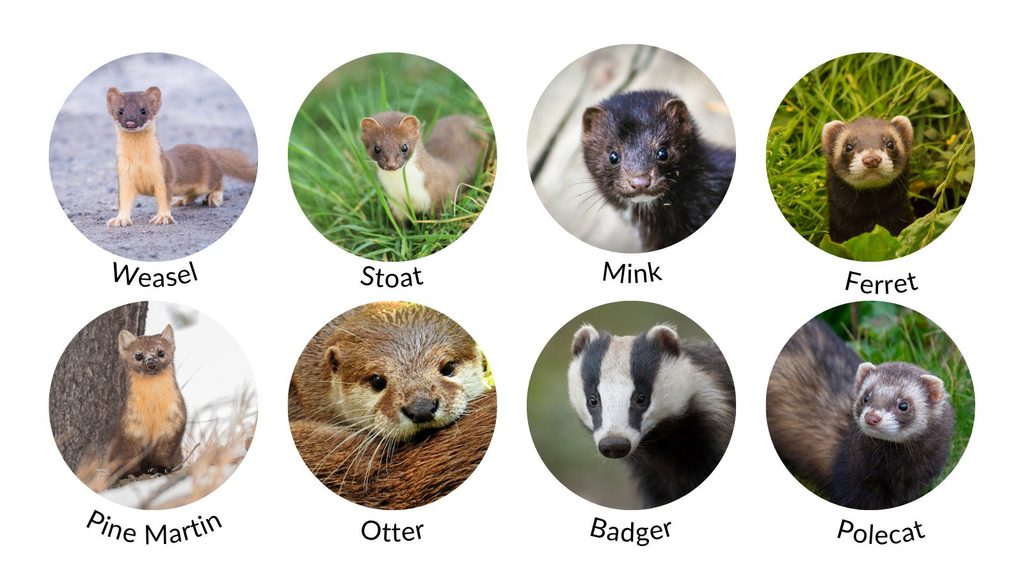
Mustelids are the largest family group, badger, otter, pine marten, mink, polecat, ferret, stoat, weasel. Although they vary in size, they have many things in common, they are muscular and powerful animals, with exception of the badger they have long bodies and long tails. Their senses are finely tuned, they have powerful jaws with impressive teeth. They use scent marking to mark territories and some use delayed implantation which means that pregnancy doesn’t start until conditions are favourable. Most have the potential to live relatively long lives and to produce large broods of young making them a successful group of animals
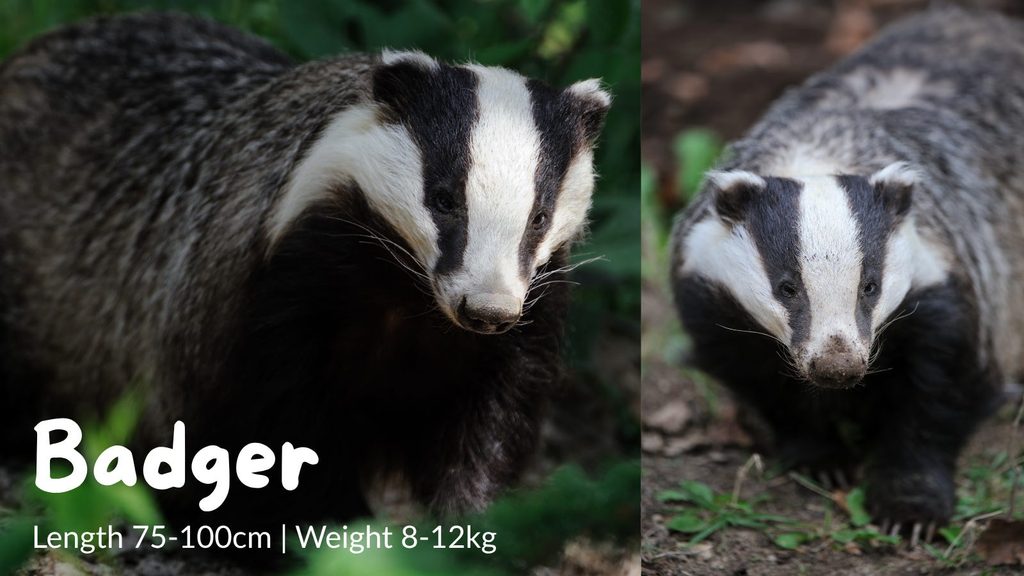
Badgers can live in large family groups; they make an extensive network of tunnels which is known as a sett. Males and females are known as boars and sows and the young as cubs. A hierarchy exists meaning old badgers are expelled from the group. Badgers are nocturnal, so they hunt through the night and rest through the day. They are omnivores which means they eat meat and plant material. Badgers hunt in a slow and methodical way, so don’t miss much available food which can be as varied as worms, blackberries, eggs, bees’ nests, chicks, maize, hedgehogs. They are very determined and have been filmed scaling high anti-predator fences and swimming to get to bird’s nests on islands. An adult badger needs up to 500g of food a day. Badgers and their setts are protected by law, this has led to a massive increase in the population. In recent years there has been some culling for the control of tuberculosis in cattle, this has led to anecdotal evidence that in some areas hedgehogs and other wildlife have had improved survival rates.
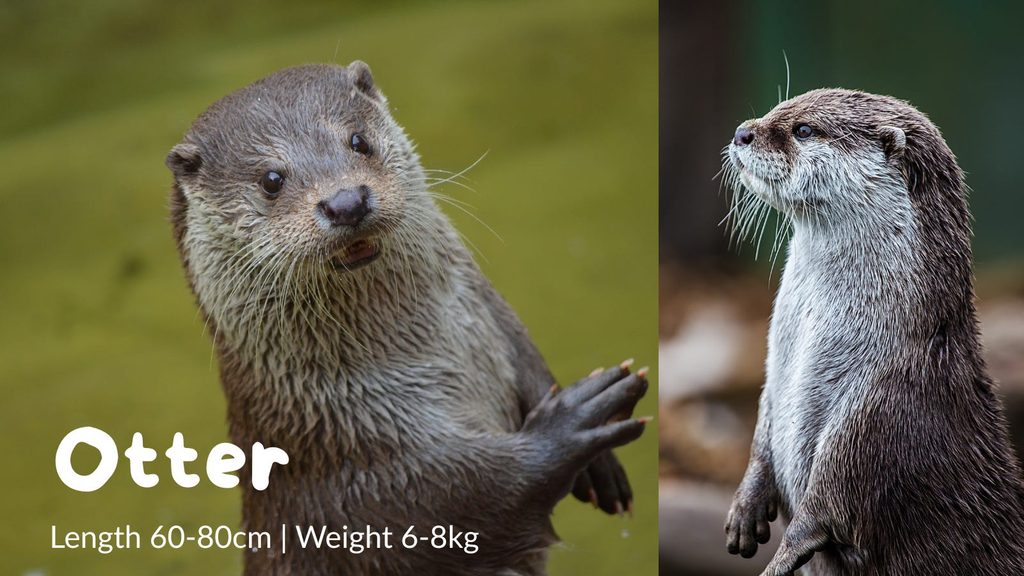
Once a rare animal, Otters are now very common and are starting to have an impact on rare species on some nature reserves. Otters are expert swimmers, helped by their sleek fur and webbed feet, they hunt fish, eels and crayfish in the water, what is left of their catch is deposited on the edge of the water. They are just as happy hunting out of water where they will eat birds and their eggs, frogs and small mammals. An adult otter will consume 1000g to 1500g of food per day. The males are only with the females for a short time for mating, the male then has nothing more to do with the family. The young are born in a holt (an underground den). Otters mark their territory with spraint (poo) which can contain remains of what they have eaten it also has a distinct smell of fishy/jasmine. Otters became quite rare as our rivers and waterways became polluted in the 1950s/60s as a result they became a highly protected species. As many of these toxic chemicals have been banned they have made a remarkable recovery.
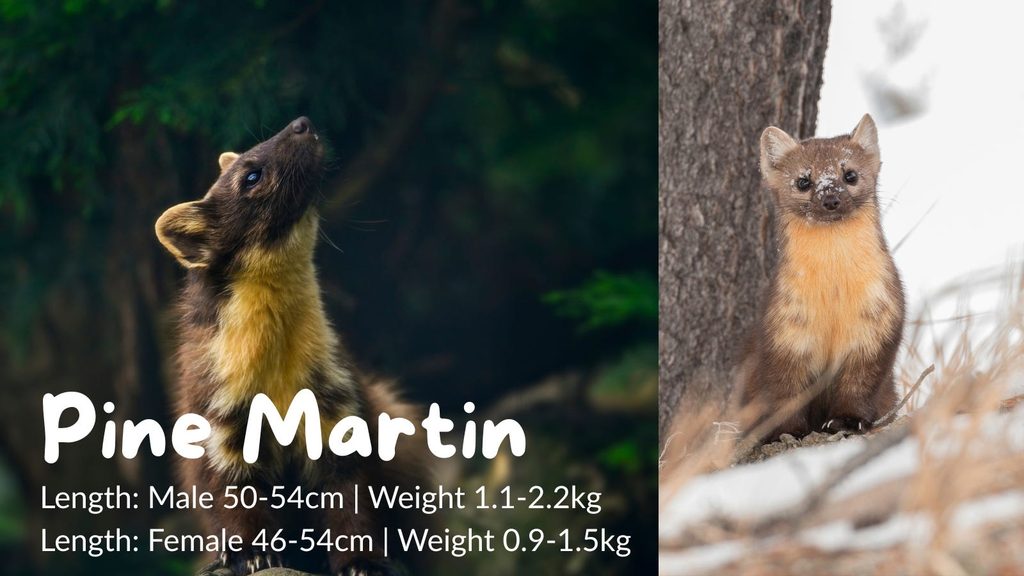
At one time pine martens were only present in parts of Scotland, due to the fact that they were trapped and shot because they were successful killers of domestic fowl and game, they would have also been collateral damage of the many rabbit trappers in the time when rabbit meat and their fur was a valuable crop. However, they have made a good recovery in Scotland and are now being reintroduced to parts of England by legal and illegal releases. Their hunting instincts haven’t changed, they are just as happy in the branches of trees as they are on the ground. They are an animal of the woods, but radio tracking has shown that some animals will range over great distances. Pine martens eat a wide range of food including fruit, insects, birds and their eggs, small mammals, rabbits and squirrels. They opportunist hunters and eat what is in front of them having to consume up to 200 gm a day as they have a high metabolic rate. They are great egg thieves and have been linked as one of the contributory factors of the continued decline of Capercaillie.
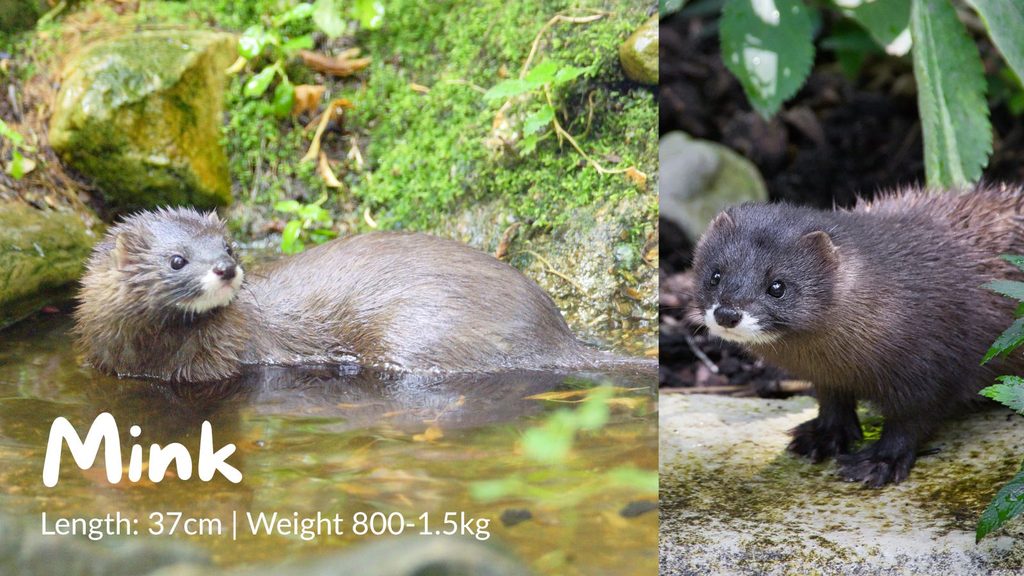
The American Mink is the odd one out in the British mustelid family as the name suggests, they are an alien species. They were brought to Britain to be farmed for their fur, ironically, they were liberated by animal rights campaigners and farm owners when the bottom dropped out of the market for fur. Neither realising what devastation they had released into the countryside. Mink are semi aquatic and quickly spread along our waterways wreaking havoc with fish, birds and eggs but in particular water voles. Like in many instances predation is the straw that breaks the camels back. Unlike Badgers, Otters, pine martens and polecats’ mink can be killed. It has been and continues to be an expensive task to try and control the mink population but through the dedication from land owners, gamekeepers, wardens of NGOs and numerous volunteers’ mink have been trapped and cleared from many areas giving water voles a chance to repopulate with the help of reintroductions.
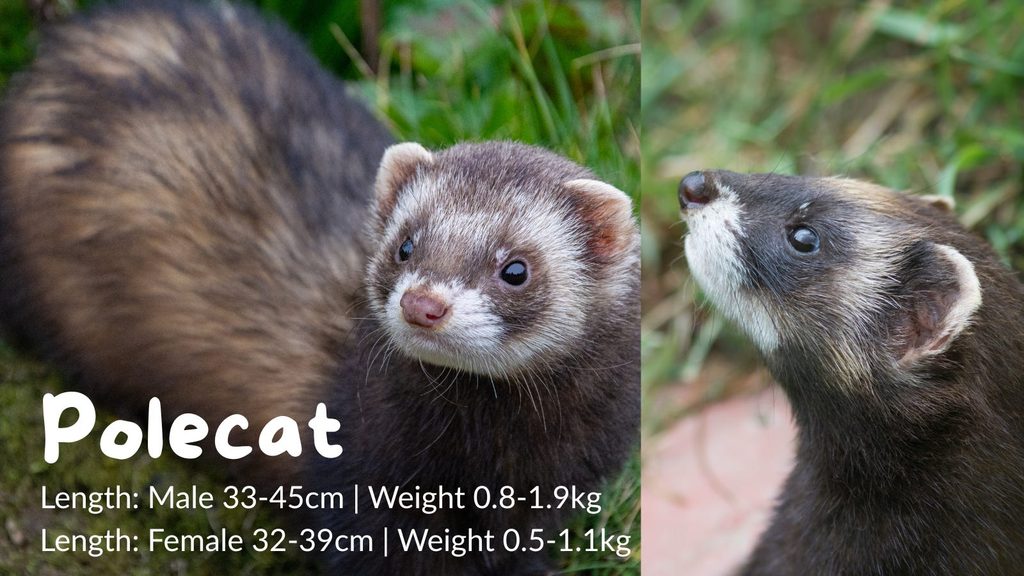
Polecats are protected but are still rare, they are increasing in numbers and areas where they are found, but are not present in Ireland. Polecats are more nocturnal hunters than their cousins and are not good climbers. What they do share is a ruthless hunting ability and are prone to kill even if they are not hungry and given the opportunity will kill all the occupants of a chicken run, hence they were hunted to near extinction. Polecats also eat a wide range of food small mammals, amphibians, birds, chicks and eggs, rabbits in particular.
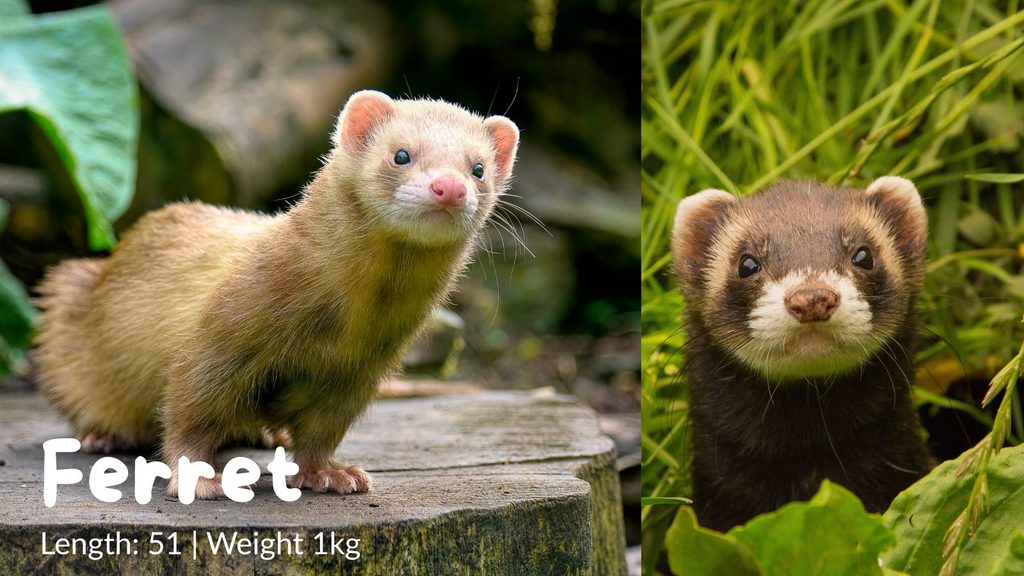
Ferrets are believed to be domesticated polecats that have been used by humans to hunt rabbits, the ferret is put in a rabbit warren (home) and the rabbits bolt from the holes into nets. The problem now is animals that have been lost on hunting expeditions and released animals that people have got bored of are living in the wild and as a predator adding pressure on ground nesting birds in particular. They are a massive problem in New Zealand where they were introduced in the late 1800s to control rabbits. Ferrets are not protected and can be trapped and shot.
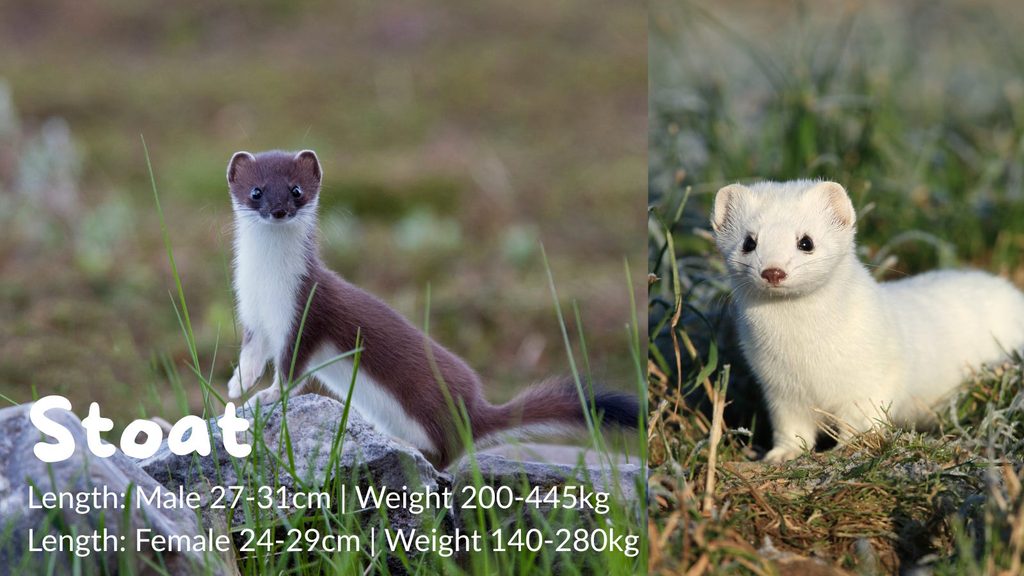
Stoats are formidable hunters; they hunt by day and night and can climb trees like a squirrel and mesmerise rabbits before biting them in the neck, so no prey species is safe. They are also widespread and common. Recognised by the black tip on their tail they also have the ability to change their coat to white when it snows, they are then known as Ermine. Stoats are not protected and can be trapped and shot. Stoats will hunt rabbits and small mammals and raid birds nest up trees but they pose a real problem for ground nesting birds. A stoat can empty a nest of eggs in no time by rolling them along by pushing them with their nose and stashing them for a later date.
The RSPB has had a multi million pound project running since 2019 to try and eradicate the non native stoat population on the Orkney Islands where they have had a massive impact on the ground nesting birds like curlew and other waders even Hen Harriers have been affected, not just by direct predation but also the depletion of their main food source the Orkney vole. Since this intensive control has been implemented monitoring has shown how species will recover if predation pressure is relieved.
There are other examples of areas where stoat numbers are managed on the mainland that have an abundance of ground nesting bird, they are mainly areas managed for wild game where gamekeepers are employed.
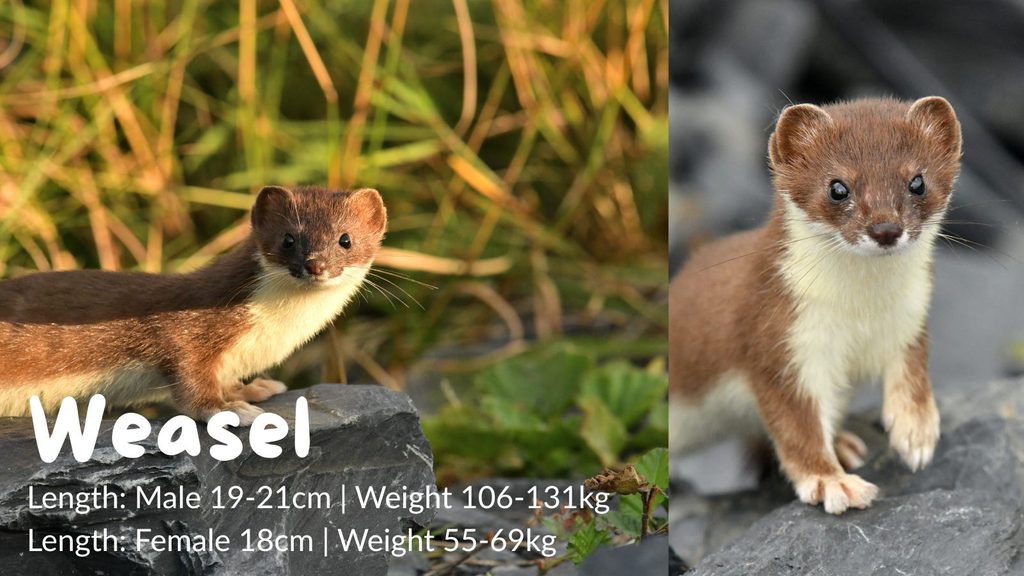
The weasel is the smallest in the family but has the mentality of a lion. They are carnivores and have to eat up to half their body weight a day to maintain their high energy lifestyle. They specialise in voles and their population is influenced by vole numbers but they also eat insects, small mammals, rabbits, eggs, chicks and adult birds. Weasels are not protected and can be controlled by trapping and shooting.
There are no weasels in Ireland.
Written by Simon Lester
Subscribe Today
Join us on our Substack journey to educate, share and explore the countryside, its communities, wildlife and heritage.