
Contrary to much of what you read, not all wildlife in Britain is struggling today. Some species are thriving. These tend to be adaptable generalists, able to exploit human-altered landscapes or benefit from a warming climate. In many cases they flourish at the expense of once-common specialists, placing further pressure on ecosystems that are already under strain.
They share several characteristics. Most are dietary opportunists, switching readily between food sources as conditions change. Many live comfortably alongside people, feeding in gardens, farmland, parks and even on urban waste. Several are mesopredators, benefiting from the loss of larger predators and changes in land use. Others are expanding simply because Britain’s milder winters now allow species once limited by cold weather to survive and breed successfully.
Familiar examples include woodpigeons, Carrion Crows, Magpies, Foxes, Badgers, Grey Squirrels, cormorants, Great Spotted woodpecker, Canada Geese, Cetti’s warbler, and butterflies such as the Comma and Speckled wood.
By contrast, many of Britain’s most rapidly declining species—including curlews, turtle doves, willow tits, Atlantic salmon and numerous specialist butterflies—depend on very specific habitats or food sources and cannot adapt so readily to environmental change. The widening gulf between adaptable generalists and vulnerable specialists is one of the defining features of Britain’s biodiversity crisis.
To make matters worse, many of these declining species require very explicit, high-quality habitat that cannot simply be recreated by leaving a patch of nettles in the corner of a garden or simply not mowing the lawn in May. Those actions are worthwhile, but they are no substitute for restoring the large, connected landscapes on which some of our most threatened wildlife depends, and the danger is you simply make life in your garden even more pleasant for the generalists.
A great example is the striking great spotted woodpecker, which benefits from garden feeders but, in itself, come spring, is an avid predator of songbird eggs and young, plus, indeed, the grey squirrel and magpie, who may also be benefiting from your hospitality.
But today, I am going to dive into an individual success story this year in my garden, and some of the mitigations, why I think this declining species has had a good breeding year, some natural, some manmade, and more importantly how you too can help them.
House martins have disappeared from much of southern England within my lifetime. While precise figures are difficult because of changes in monitoring methods, the best available data suggest their English population has fallen by around half since the late 1960s, with the steepest losses occurring across southern and eastern England. Resulting in the species now being added to the UK’s Red List of Birds of Conservation Concern.
So, what can you do to help?
Insects
Perhaps 2026, with its inclement spring and just enough rain before the July drought, created a natural abundance of insects, probably the most important factor overall for their survival. But long-term, anything you can do to increase your insect population will help them. Not worrying about golf-green perfection on your lawn could be a good place to start.
A healthy lawn is more than grass. It is a nursery for midges, gnats, crane flies, leafhoppers, flying aphids, ants and countless other tiny insects that drift skywards to become food for flying house martins, swallows and swifts. Replace that living meadow with a weed- and moss-free carpet of ryegrass, and the aerial larder begins to empty.
Safe housing
How many wildlife-garden books consider the house itself as part of the habitat? Yet if you only have a small garden, that consideration becomes even more important. And after all, there is a clue in the house martins’ name.
Years ago, before we unintentionally evicted our friendly sparrows through modern building design, the familiar chelp-chulp of sparrows was an everyday part of our soundscape. Alongside them came the cheeky whistles of starlings — another once-common companion reduced to the same also-ran category. But this year I did, and still do, have the friendliest chatter of wonderful house martins living side by side – outside my office window.
Now remember the great spotted woodpecker I mentioned earlier. They are thought to have more than quadrupled in England since 1970, a conservation success. But when there have four young demanding food, they get a bit desperate, and over the years they have taken to chiselling out my house martin nests to predate both eggs and young to such an extent that I was down to only one early successful brood last year.
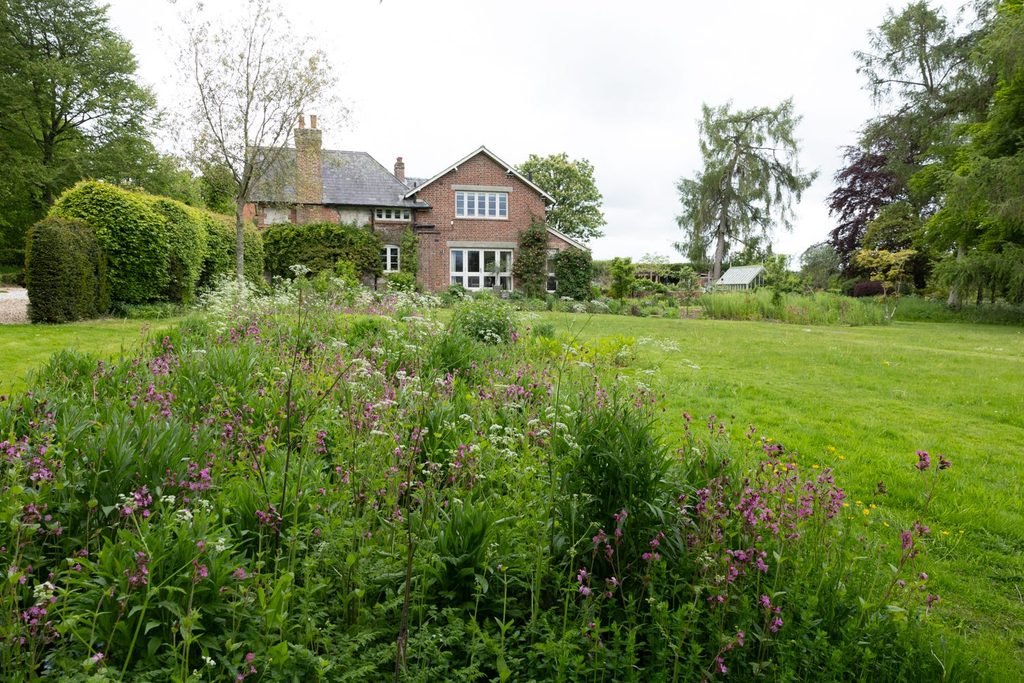
Wild animals instinctively understand the first rule of estate agents: location, location, location. Fortunately, I had that part right. The north- and east-facing walls of the house sit beneath deep eaves, sheltered from the prevailing sun and rain, with clear flight paths for house martins approaching at speed.
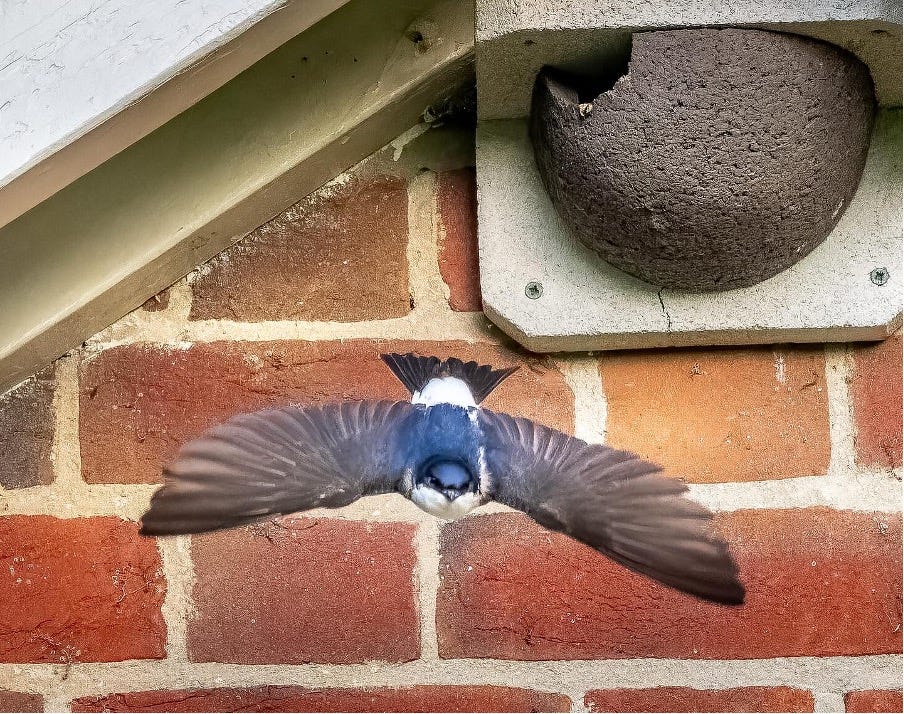
In the hope that these birds would return, I installed five artificial nest cups, too strong to be susceptible to woodpecker attack, beneath these eaves. Together with one natural mud nest that had survived the winter, they offered six ready-made homes awaiting their spring tenants.
Only a single pair returned in April and quickly claimed one of the nest cups. I assumed that would be the extent of this year’s colony.
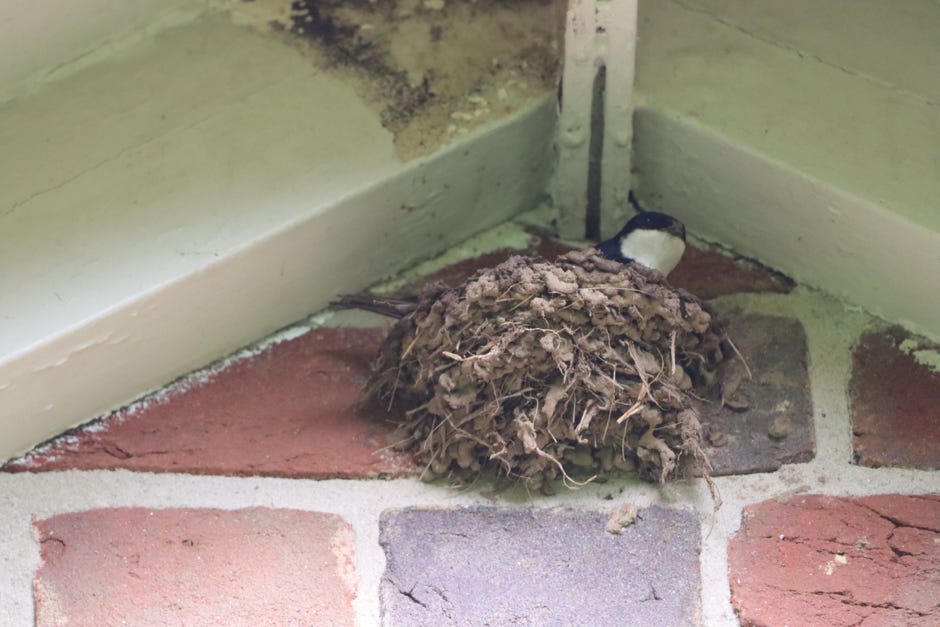
Then, in the middle of May, once the North wind had subsided, everything changed. For one extraordinary week, the air outside my office became a whirl of black-and-white wings, chattering calls and aerial skirmishes as newly arrived birds disputed ownership of every available nest site. Within days, all five nest cups were occupied, each with a black-and-white guard at the entrance. At the same time, three new mud nests were under construction alongside the original natural nest, itself now occupied.
In little more than a week, what had begun as a solitary pair had become a thriving colony of nine active nests.
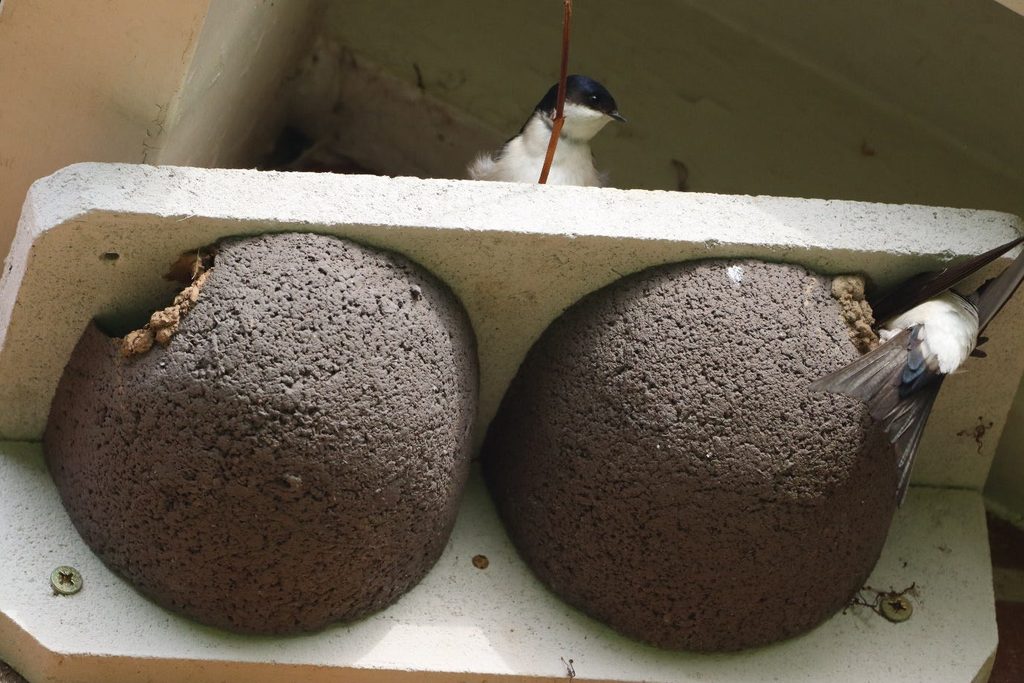
This left me with two questions. First, why had the great spotted woodpeckers ignored the natural mud nests? Second, why had so many house martins suddenly appeared, even smearing fresh mud around the entrances of the artificial nest cups as though acknowledging their ancestral building traditions?
I suspect the answer to the first question is twofold. In recent years I have largely stopped feeding birds through the winter, making the garden less attractive to resident woodpeckers. Just as importantly, the sudden increase in the size of the house martin colony may itself have provided protection. Predators weigh risk against reward, and a noisy colony of vigilant adults, sheltered under the protective umbrella of a house, is a far more daunting prospect than a solitary nest.
Nesting high beneath deep eaves limits the angles from which a predator can attack, and every failed attempt costs time and energy. It is rather like a colony of lapwings confronting a marauding crow: a single bird is vulnerable, but a crowd of determined defenders can often harry a predator until it gives up and moves on.
Livestock
The answer to the second question was more of a revelation, and one that has made me think differently about how we attract and conserve house martins.
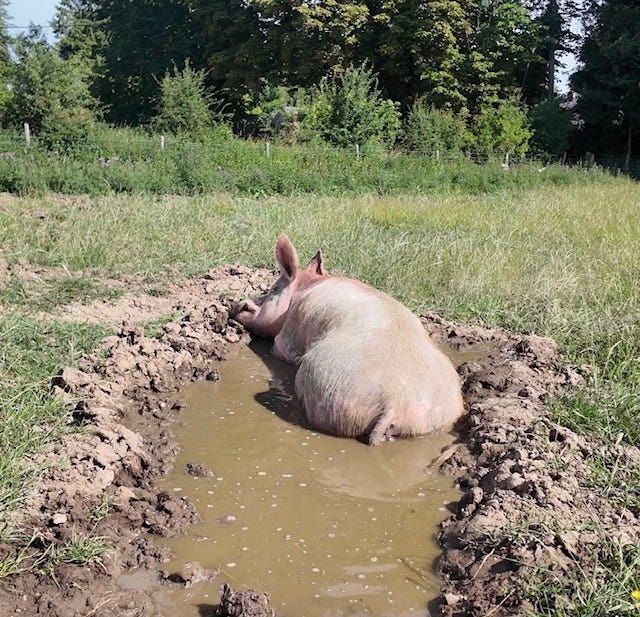
We have a new pig in the village—a friendly chap called Boris, with typical big cojones. When the weather warmed in mid-May, during the first heatwave of the year, Boris found himself getting rather hot under the collar. Unlike many animals, pigs have a limited ability to regulate their body temperature, so his owner created a mud wallow to help him cool down.
There, Boris squelched, kneaded and puddled the clay until it became the perfect natural pond liner. And there, six weeks later, quite unexpectedly, was my answer to the second question – a tiny muddy pond, inhabited by a large pink pig, under a swirling cloud of house martins. I had always suspected that the mud available from the nearby River Kennet was unsuitable—being a chalkstream it is very fine, more like silt— and besides, by the middle of June it was usually baked dry. But now, just across the road, the martins had access to the perfect building material: clay that they could collect, temper and mould into their tiny building pellets throughout the summer.
Praise be to Boris.
His owners later told me that, for the first time, they had also enjoyed success with two pairs of swallow this year.
Written by John Miller
Subscribe Today
Join us on our Substack journey to educate, share and explore the countryside, its communities, wildlife and heritage.