
Ever since I was sixteen, we have reminisced about the long, hot summer of 1976, when Elton John and Kiki Dee’s duet, Don’t Go Breaking My Heart, topped the charts. Fifty years later, we have a new long, hot summer to remember — the summer of 2026 — complete with a new musical pairing: Sam Fender and Olivia Dean, whose duet topped the charts with Rein Me In.
But that is where the similarities end.
In 1976, the spring barley in front of our house was ablaze with yellow corn marigolds, blue cornflowers and scarlet poppies. Poor old Farmer Ogle’s red 550 Massey Ferguson Combine caught fire while harvesting, and when the swirling smoke and dust finally cleared, a blackened swathe of char stretched halfway across the field.
In the intervening years, those flowers have disappeared, along with much of the wildlife that once accompanied them. The skylarks no longer sing above the fields; the small covey of grey partridge has vanished; the soft summer churring of the turtle dove is silent in the bridleway; and the flocks of lapwings, which once came bounding down from the North to follow the autumn plough, are all gone.
All of this made the resurgence of butterflies in the summer of 2026 even more special. Their abundance offered a welcome reminder of what we can sustain, and an inspiration to build further resilience in the garden for butterflies
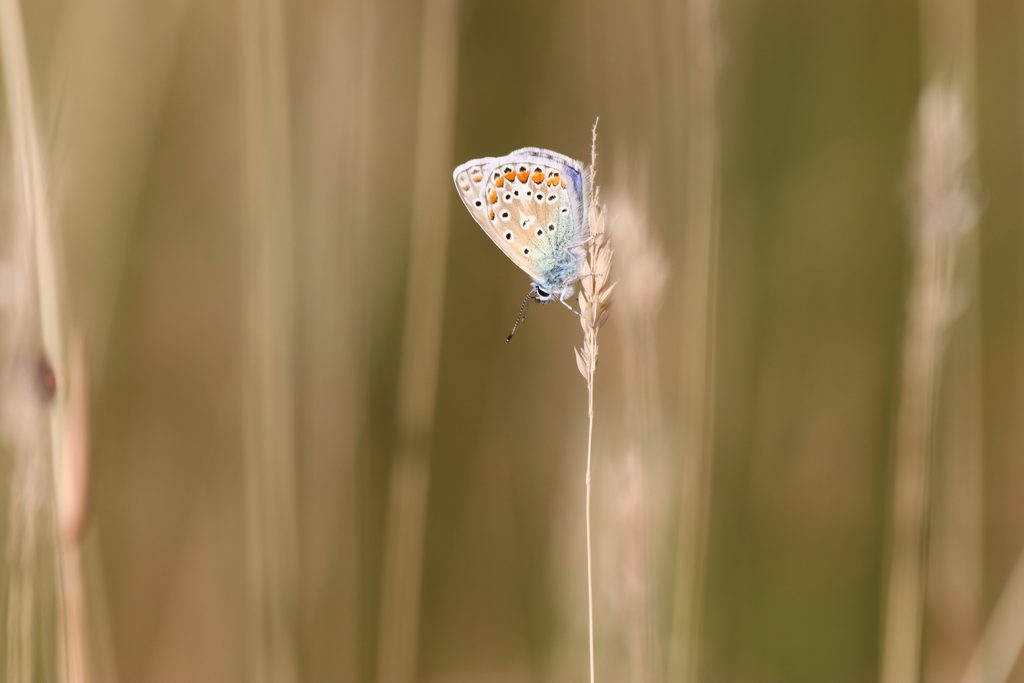
The warm, dry spring, following a very wet January and February, provided ideal conditions for many plants to bloom and flourish. The first butterfly to appear in noticeable abundance was the Holly blue. I wonder how many people notice this beautiful little creature as it flits through the early sunshine of late March and April?
Unlike other blues, its caterpillars feed on the leaves, flowers, and buds of shrubs, particularly holly, where the butterfly’s delicate blue contrasts with the glossy green of the leaves. As the soil dried in the spring sunshine, I found them settling on the vegetable patch, their long proboscises probing the ground for salts left accessible as the soil dried after watering. Their silvery-white underwings, with bands of tiny black dots, easily distinguish them from any other blue species
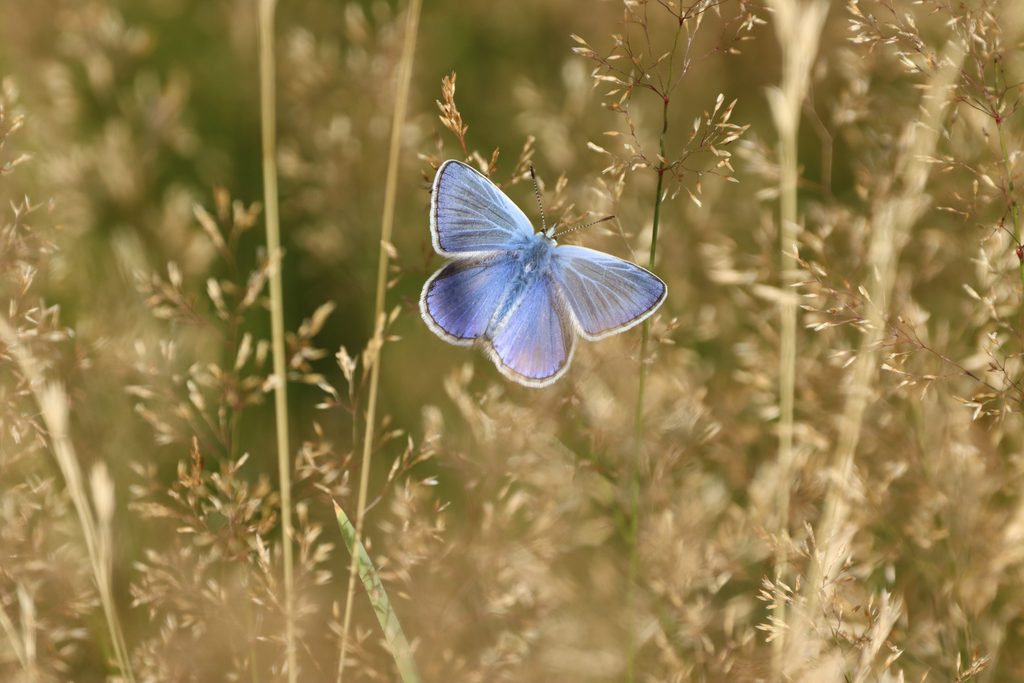
If the yellow brimstone is the first harbinger of spring, then the holly blue follows quickly behind, just before the male orange tip. The spring remained dry, and a particular cold week in May, just before the first heatwave took out all my apples and newly formed plums, gave no forewarning of what was to come. By early June, the lack of rain was worrying, and it was probably only a wet week in the middle of the month that saved the summer.
But this is where my lawn became a spectacle
The Satyridae family of butterflies, commonly known as the ‘browns’, includes Speckled Wood, Meadow Brown, Marbled White, Ringlet and, last of all, Gatekeeper. In this sequence, they fly through the spring and into summer, but they all share one thing in common. Their young feed on grasses, though they can be quite particular about which species they favour. Most spend the winter as caterpillars, sheltering among the stems and roots. Deep in these swards exist complete microclimates, ecosystems, nurseries, and hibernacula awaiting the return of the spring solstice.
Like the Holly blues, these grassland butterflies were plentiful this year, thanks in part to the weather. But two other factors played their part.
My mowing regime includes a patchwork of three sward types. Some grass is left uncut all year to form dense clumps (remember the microclimates); some is left from mid-May to September, and further areas, particularly paths, are cut all summer at a normal lawn height for ground-feeding birds such as wagtails, green woodpeckers, robins, blackbirds and thrushes.
Gardens can provide much-needed shelter for butterflies, with the taller grass supporting ‘brown’ butterfly caterpillars for both feeding and hibernation, and roosting sites for the blues. No cows in my garden, so only I can work the landscape; this is the opposite of abandonment. It is satisfying in the winter to know, below this green, everything is there, safe through the darkest months.
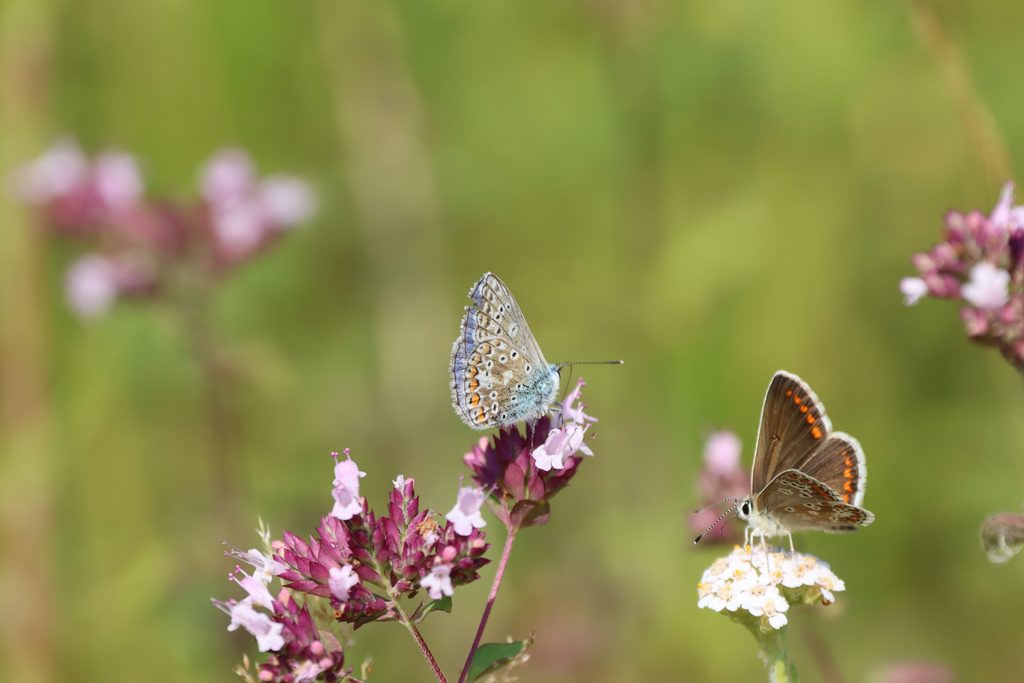
In addition, I encourage a mix of grasses, including bent, fescues, timothy, cock’s-foot, couch grass, Yorkshire fog, wood false-brome and meadow foxtail. Different butterfly species favour different grasses, so a varied sward offers a wider range of caterpillars the food plants they require.
The familiar slogan Don’t Mow in May does little to address the problem. Nor will planting a few buddleias, however attractive they may be to adult butterflies. Is it any wonder that modern lawns, dominated by a single perennial ryegrass and kept short by mowers and strimmers, support fewer butterflies?
We need to think about the entire butterfly life cycle: not just the flowers that feed the adults, but the grasses that feed the caterpillars, the places where they shelter to complete their development, and live through the winter. A garden that provides all these things can offer far more than a temporary feeding station. It can be a place where butterflies build resilience to the whims of weather, with reservoirs of abundance.
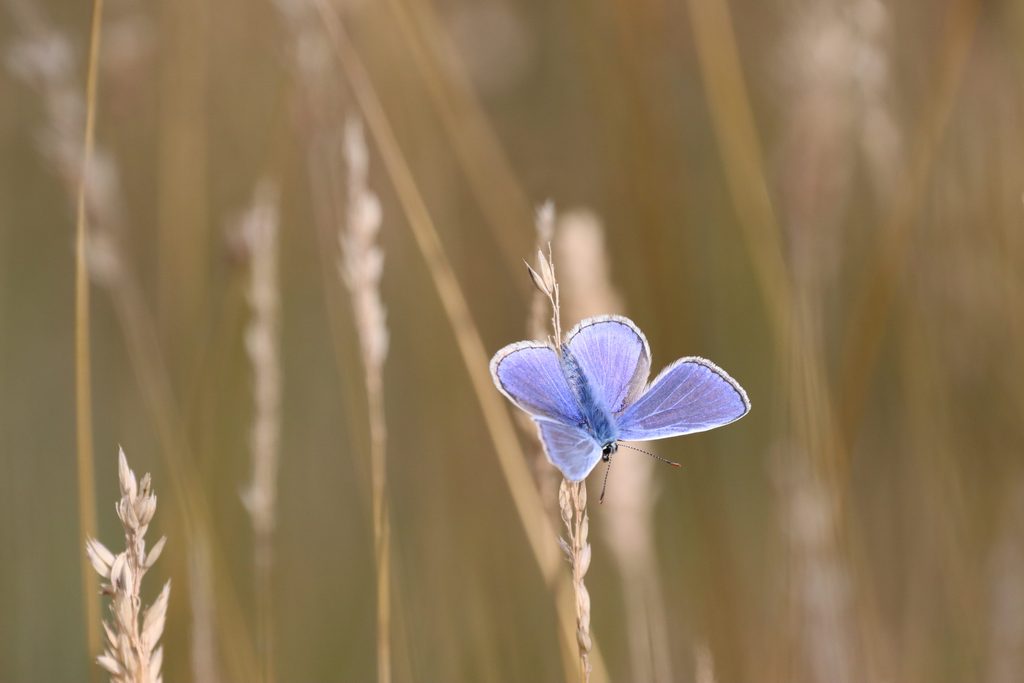
Along with grasses, for the ‘brown’ butterflies I have a large patch of bird’s-foot trefoil for the common blue caterpillars, which I kept watered for the first time this year, and this species in 2026 blew my mind.
About seven thirty am, as the early morning sun crept across the lawn during July and August, it appeared as if blue flowers were opening all around with darker creases down their middle – paired sapphires. Each bloom pitched, angled to the sun. A lawn bejewelled, awakened by heaven. I had no idea they were here each night. Towards the end of the day, when the sun once more dropped to the West, I went searching. To my delight (once my eye had built up muscle), I found their diminutive bodies, wings tightly closed, head down, sleeping. Sleeping gems. In clusters of three or four, or singles, among denser patches of grass flowers, especially the dried stems of Yorkshire fog. Some were grouped on the faded flowers of Nipplewort (Lapsana communis), but by the morning spiders had often sucked their juices dry, and so by mid-August only grass was used for sleeping – is this evolution?
This evening and morning ritual became a highlight of my summer of 2026 – summer blues
The most I counted one evening was twenty-five sleeping gems, surely the best motivation to consider how to best manage my lawn. Partly due to the lack of rain, these butterflies lived longer than normal, and it was mid-September before I dared trim the top of the grass.
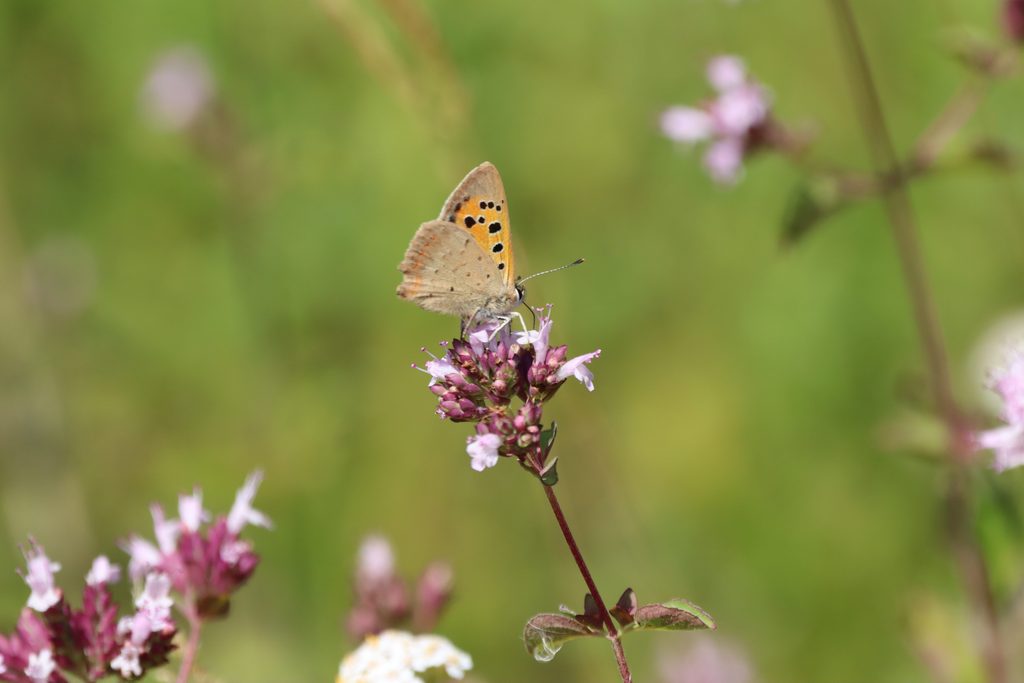
Two other butterflies rarely seen in the garden appeared with the blues – brown argus and small copper. They alighted on the many marjoram flowers but were particularly attracted to a small clump on the lawn, where all three species could be seen together. Since it was towards the end of a hot, dry summer, I continued watering this clump of marjoram until it was probably the only flower left in the sun, together with the white horizontal plates of yarrow, which was a favoured by the small coppers.
I learned so much, but the once-bountiful small tortoiseshell of 1976 was absent all year.
I will not see in another fifty years, but I pass on these tips, and maybe an AI duet will have a summer hit in 2076, and you will be grateful your garden was shaped to make the most of it
Nature can never be taken for granted, but it can always offer hope.
By John Miller
Subscribe Today
Join us on our Substack journey to educate, share and explore the countryside, its communities, wildlife and heritage.