
A wader scrape is one of the simplest pieces of habitat that we can create, yet in the right place it can provide an exceptionally valuable feeding area for breeding waders and their chicks.
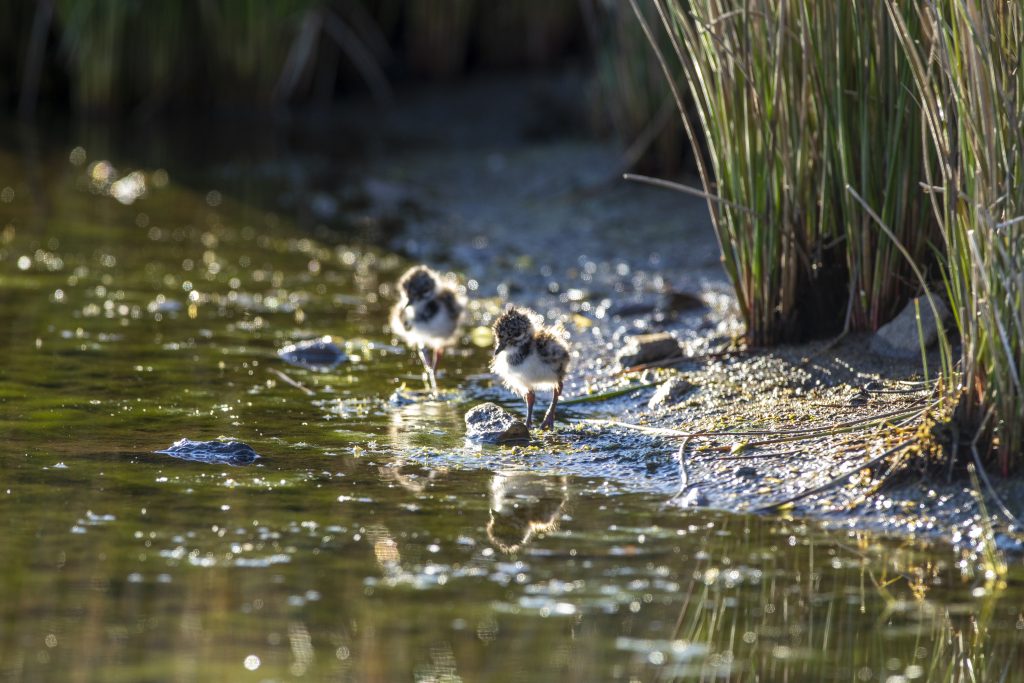
Unlike a conventional pond, a wader scrape is simply a broad, shallow depression designed to hold seasonal water and expose lots of soft, muddy ground around its edges. As water levels gradually fall through spring and summer, fresh areas of wet mud are continually exposed, like a beach under an ebbing tide, providing ideal conditions for worms, insect larvae and lots of other invertebrates.
This is particularly valuable for birds such as lapwing, curlew and snipe (and even quite a few small birds like wagtails and pipits enjoy “bugging” on the mud). The chicks of these wader species need abundant invertebrate food within easy walking distance of their nesting areas, and depending where in the country you are, a scrape may be used 365 days of the year, not only at chick time.
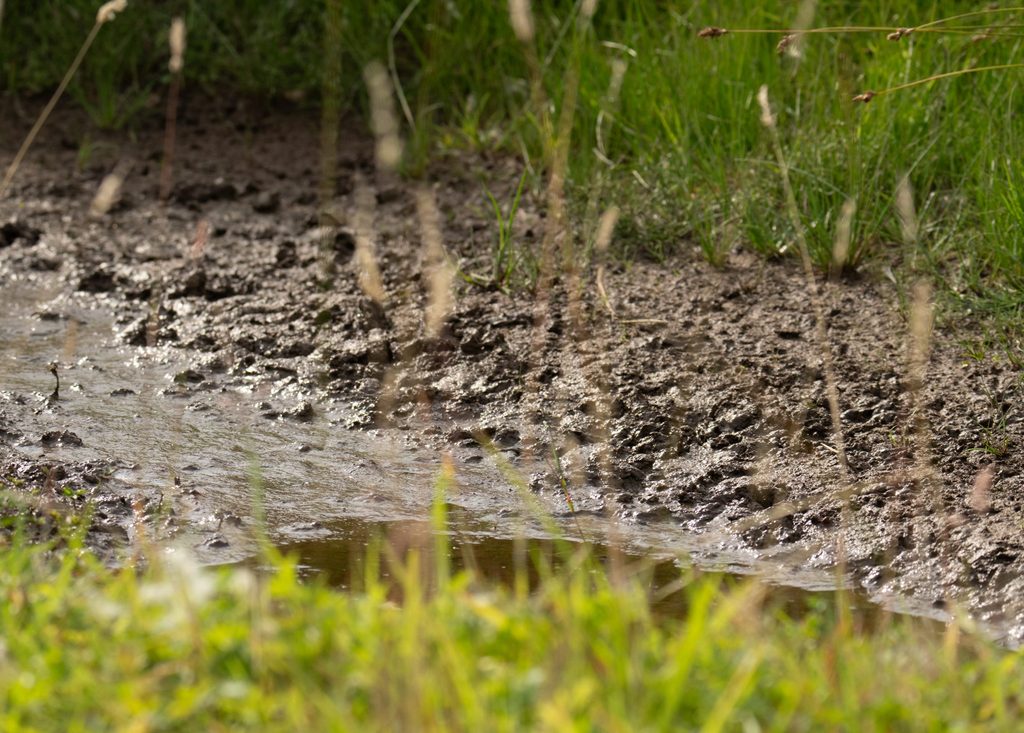
Retaining or creating wet feeding areas can therefore make the surrounding grassland considerably more useful to breeding and resident birds.
Choosing the site
Location is probably more important than size. Look for a naturally damp hollow, rushy corner or area where the water table already comes close to the surface. Trying to create a scrape on dry, freely draining ground will inevitably result in little more than a golf bunker as soon at it stops raining in spring.
Waders also favour open landscapes with good visibility, so wherever possible keep scrapes away from woodland edges, tall trees and dense scrub. A scrape situated within or alongside existing wader breeding ground is considerably more valuable than an isolated pool surrounded by unsuitable habitat. As with all additions to habitat, the right thing in the right place.
Creating the scrape
The basic principles are simple:
- Keep it shallow. Remove soil gradually rather than excavating a deep pond. Try to vary the depth across the scrape, so that as the water retreats, the entire area isn’t drying out at the same time.
- Create very gentle slopes. Long, shallow margins are far more valuable than steep banks. As the water retreats these produce progressively more wet mud on which birds can feed.
- Make it irregular. Kidney-shaped or winding scrapes create considerably more shoreline than a perfectly round hole of the same area.
- Think about water before digging. Ideally the scrape should intercept an existing high water table or collect water naturally during wetter months rather than relying solely on rainfall.
- Don’t over-tidy it. Some tufts of vegetation, and light poaching by livestock can actually be beneficial. Grazing around a scrape can help maintain the mixture of short vegetation, mud and shallow water that feeding waders need, plus the dung encourages even more insects and invertebrates.
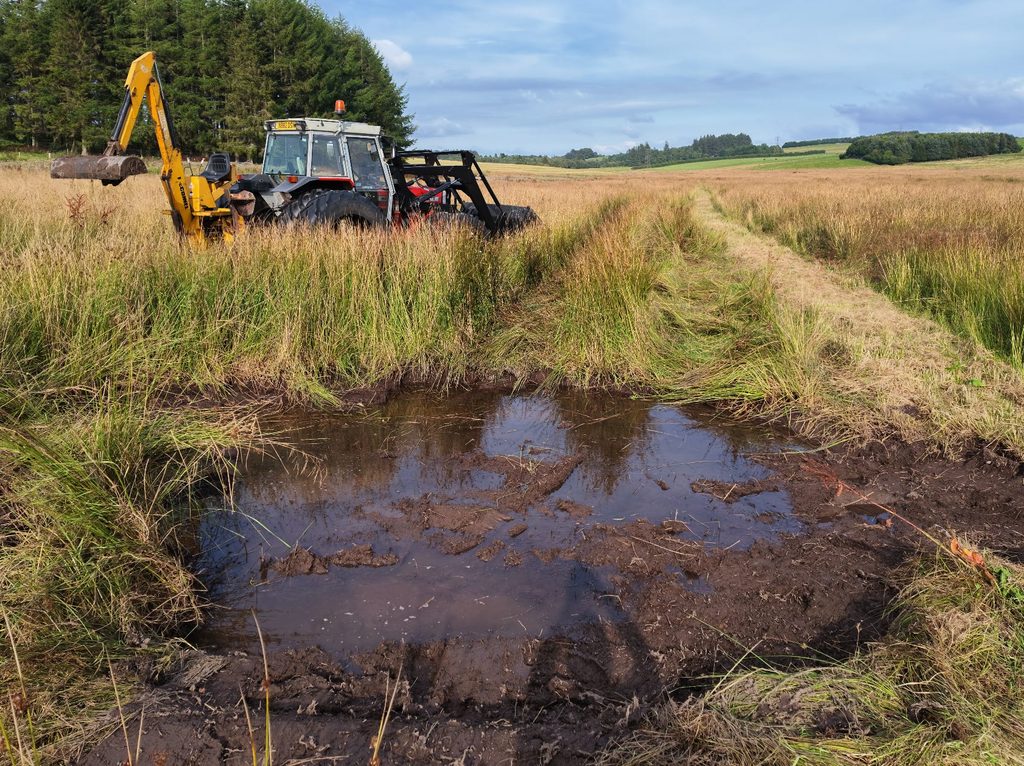
My scrapes vary from about 5 to 25 square meters, and I use an old “McConnel Ditch King” tractor mounted back hoe to dig them.
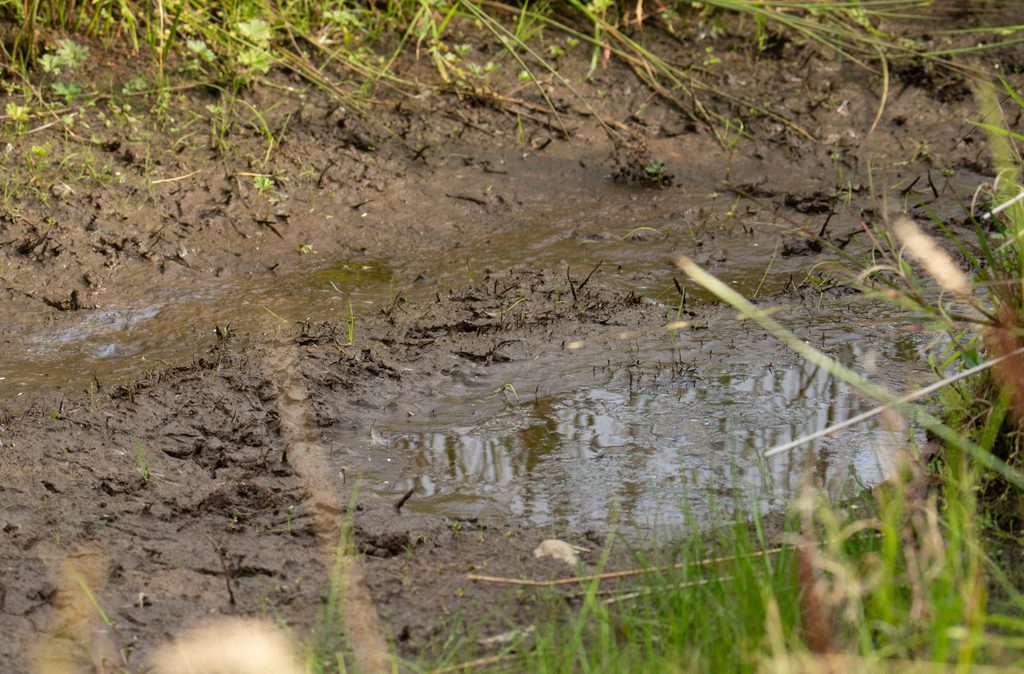
Where the ground allows, several scrapes of different shapes and sizes beat one big one, but don’t get too hung up on size, anything is better than nothing, and the more the merrier.
Management afterwards
A good scrape should change through the seasons. Ideally it holds water during spring before gradually drawing down and perhaps drying almost completely later in summer whilst remaining very soft and squidgy. That changing waterline is what makes it productive and so attractive to birds.
Over time vegetation and silt will begin to fill the scrape. Grazing or mowing of rank margins or light re-excavation may be necessary to keep the open muddy ground available.
Remember, the objective isn’t to create a pristine ornamental pond. A muddy, shallow, slightly untidy scrape surrounded by a varied grassland sward is exactly what we’re looking for. For lapwing chicks hunting insects, a curlew brood moving through damp pasture, or a snipe probing soft mud, that small wet and muddy patch can provide a disproportionately large amount of valuable feeding habitat.
Go out and try it, it’s simple, cheap, rewarding and beneficial, you won’t regret it, as long as you don’t get a digger stuck!
Written by Josh Burton.
Subscribe Today
Join us on our Substack journey to educate, share and explore the countryside, its communities, wildlife and heritage.