
We all carry within us a quiet map of place, our identity, shaped and drawn in childhood. For some, it is etched in the wide sweep of open country: for others, a local park, or the familiar bounds of a garden. Yet beyond what we see lies another layer—forgotten and overlooked. How often do we pause, long enough, to listen to the soundscape that has shaped us just as deeply? The English countryside has been immortalised from Constable paintings to Wedgewood Pottery, but who calls out the change in the soundscape – we miss a vital sensory.
Of course, it shifts with region and geography—not so much in dialect as in species. It may be the bubbling call of a curlew, the keen of a gull, or the bright, fluting phrases of a blackcap. And though it is only March, the dawn chorus is already gathering, building a little more with each passing day. Soon it will be lifted further still, as summer migrants press northward and the air fills with their returning voices.
These songs, though intricate, carry simple truths: come, be my mate—I am strong, I have the time and energy to sing; or, to rival males, a clearer warning still—keep away, this is my place.
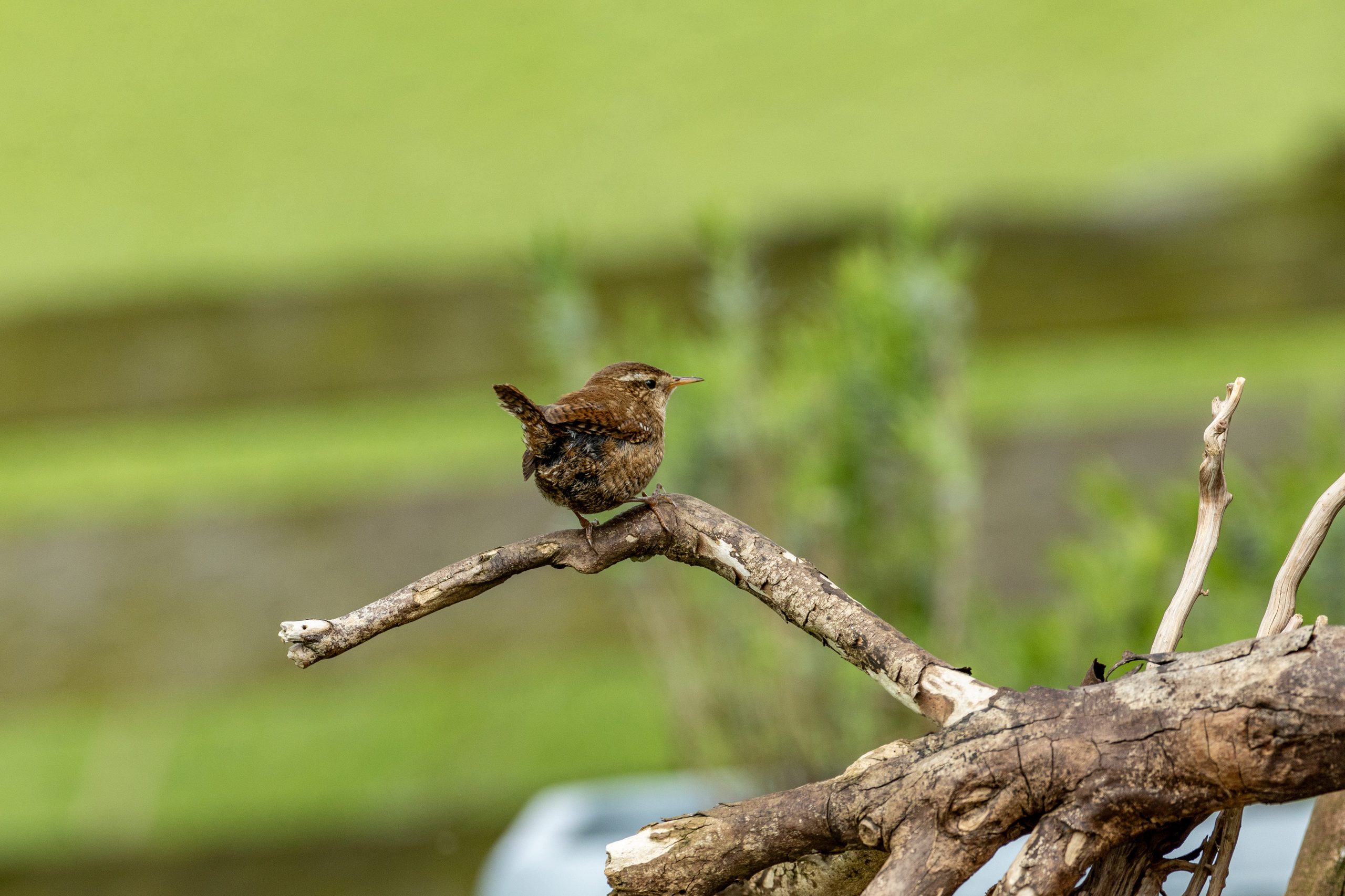
The first birds to break the silence are usually those with the largest eyes—best equipped to read the dim light before dawn. True to form, it was the robin that stirred things first this morning, followed by the blackbird, then the song thrush, and, close behind, a wren.
Do you know the song thrush, by its old country name? –‘ thrice-cock’, earned from its habit of repeating each phrase three times. Once you begin to recognise a bird’s song, it gathers meaning and presence. Field guides often render the thrush’s voice as something like “seoo, seoo, seoo, tidic, tidic, tidic, tew, tew, tew”—useful, perhaps, but a little abstract.
What lingers more readily are the local, phonetic interpretations, which are easier to teach children, passed from ear to ear. In Wiltshire, we recognise the song thrush by the phrase: “Did he do it? Did he do it? Did he do it? He did, he did, he did… phew, phew, phew.” Wake tomorrow, if you can, just before six, and listen. There’s every chance you’ll hear him for yourself.
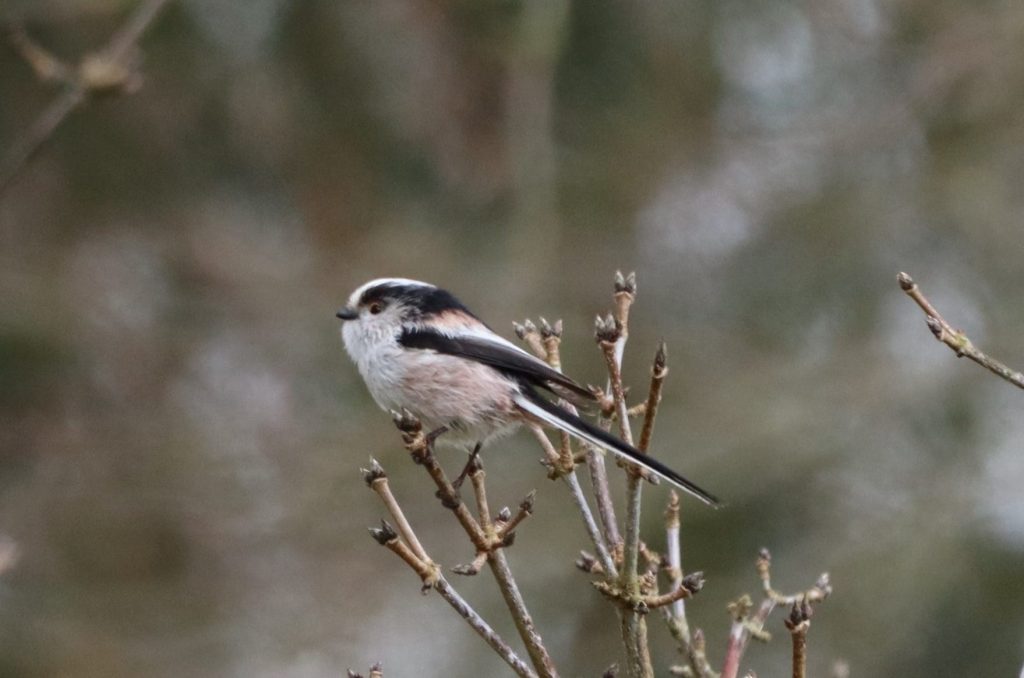
The long-tailed tits started building their nest this year, back in February, and could often be seen collecting spider webs off this acer to help bind the intricate dome of lichen, moss, and feathers.
Now, you may well have fed birds through the winter, drawing them close to the house, their movements part of your daily rhythm. But as the season turns, many will drift away to set up territories to breed. The question is: how many will choose to remain within your garden’s bounds? That choice rests on a handful of simple necessities—five, in truth—and if your garden can offer them all, you give yourself, and the birds, the best chance of success.
If you get it right, generation after generation may return to nest in the same quiet corners of your garden. As a fisherman, I am often reminded of salmon lies. No returning salmon is told where to rest in its natal river, and yet, year after year, they hold in the same places.
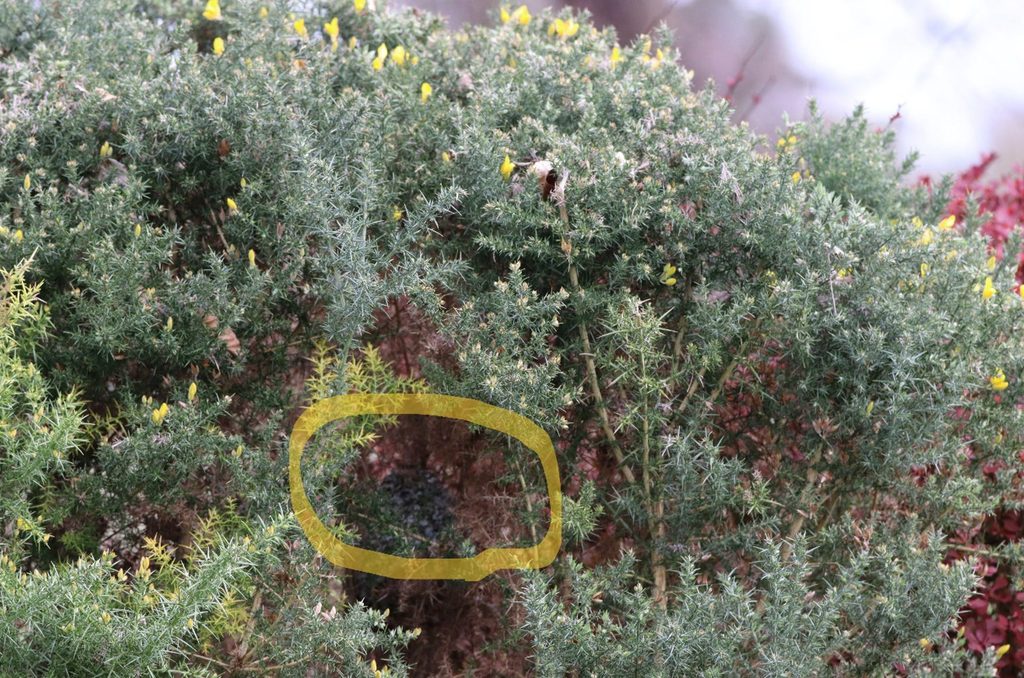
Long tail tit nest is in this gap – Note I trim the gorse (after nesting) each year, so it remains a tight structure.
There, the current runs just so—matched perfectly to their need to conserve energy. There is shelter, a measure of safety from predators, and a freedom from disturbance.
So it is, in its own way, with birds. Offer the right conditions, and what is discovered one season may become an annual event. Mistle thrushes have nested in my big larch tree now for ten years in succession.
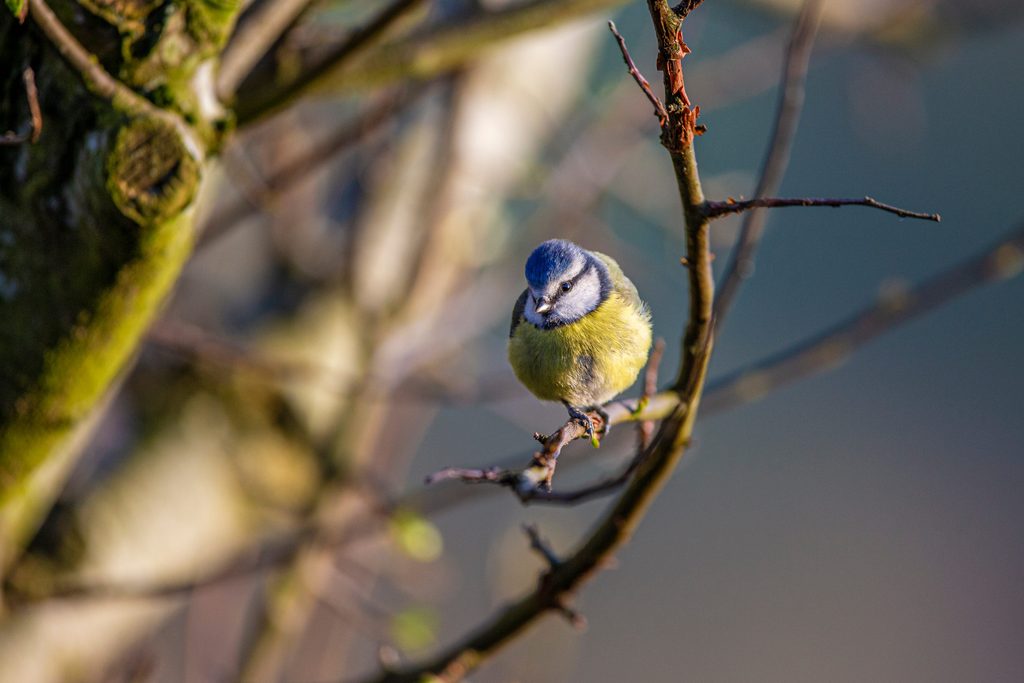
My five truths for successful bird nests in the garden
Shelter from the elements: protection from prevailing winds, the bite of cold northerlies, and the glare of direct sun.
Cover from predators: for ground-nesters, the densest tangle of native planting you can tolerate; for those above ground, thick hedging, climbers, and trees, and, where you use nest boxes, a preference for an east-facing aspect.
Freedom from disturbance: your cats and dogs may seem gentle companions, but their mere presence can be enough to unsettle nesting birds.
A ready supply of food: ditch the chemicals and over tidiness to nurture your insects, and the rest will follow. Always plant native plants and try to have flowers spread throughout the year.
Somewhere safe for fledglings: that first, uncertain flight into the wider world is critical—young birds need cover and safety while they continue to be fed and guided by their parents.
Let’s now return to my garden and look at those five necessities and see how they relate to a pair of long-tailed tits who have just finished building their amazing nest.
Shelter from the elements: with trees to the north, facing south, but under the canopy of some beech trees, three years ago, I planted three common gorse bushes, which soften the weather, with their spines and structure.
Cover from predators: long-tailed tits are especially drawn to gorse—not only for its shelter, but for its armour. The prickles offer a degree of protection from many would-be raiders, most notably magpies and other corvids.
Freedom from disturbance: Well, we don’t have cats or dogs, so that is very simple, but certainly with dogs, you can set aside a quiet place that is out of bounds
A ready supply of food: this is not a call to rewild the entire garden. There is space for both order and looseness. Some areas here are carefully kept, but we avoid chemicals and allow for pockets of life—piles of old logs, heaps of herbaceous cuttings, and grasses left to grow at varying heights. Do what sits comfortably with you.
Somewhere safe for fledglings: all of the above come together here. A garden cannot be an island of exposure, without cover; young birds may leave the nest only to be immediately predated. Remember, young birds in nests are at their most vulnerable just before they fledge, when they are noisy, begging for food and have outgrown their home, and equally when they have just left the nest, and they have still to hone their flying skills.
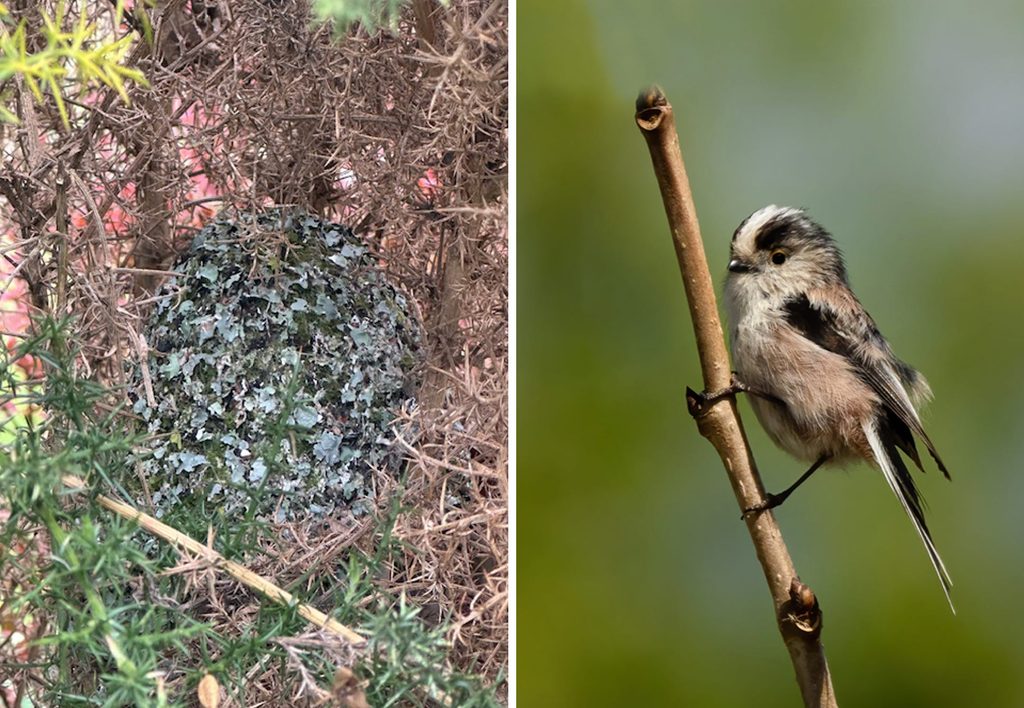
The finished structure – the entrance hole is on the other side, and cannot be reached with a camera, nice and hidden!
Written by John Miller.
Subscribe Today
Join us on our Substack journey to educate, share and explore the countryside, its communities, wildlife and heritage.